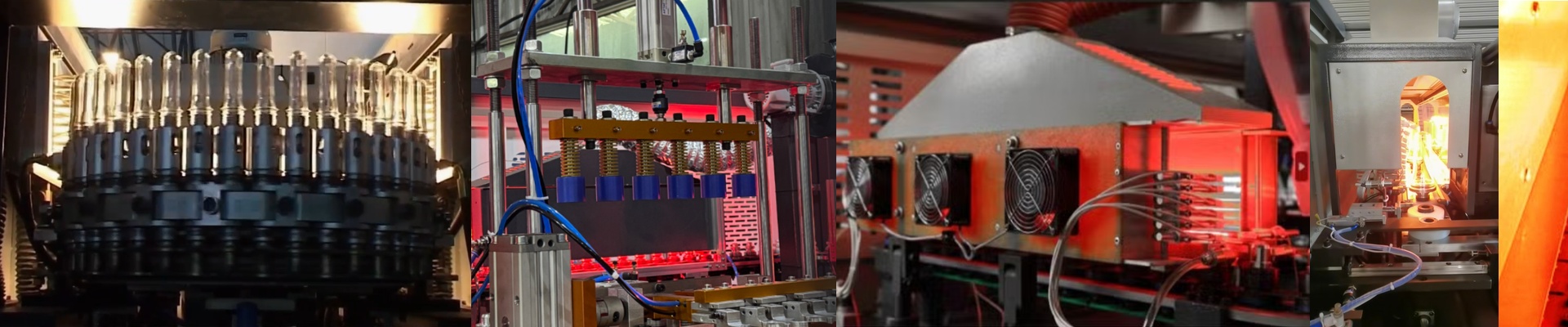
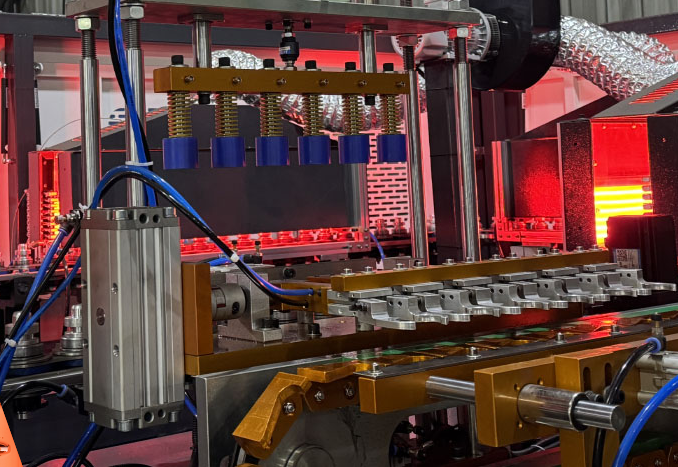
On the floor, the SBO blow molder lives and dies by repeatable preform temperature. If the heating tunnel starts drifting, you see it right away—thin necks, crystallized shoulders, and the line speed getting pulled back just to keep things stable. With the SBO, preform heating optimization isn’t about chasing more wattage. It’s about matching the OEM’s thermal profile with the right infrared emitter, then locking it in. We set the upgrade up with quartz short-wave infrared lamps sized to the SBO tunnel geometry. They run on 230V with R7s connectors, so they drop straight into the existing sockets. Each lamp is tuned for a stable spectral output, so the preform surface heats fast while the core stays even. That narrows the temperature spread that otherwise forces you to overheat and overcompensate. In practice, you can hold setpoints within ±2°C across the preform wall and keep the heating section consistent, bottle to bottle. Here’s why it works: the SBO was designed around a specific heat-input pattern. Swap halogen for quartz infrared, keep the 1:1 geometry, and use the same mounting points, and you restore the intended profile without re-engineering the tunnel. Operators see fewer temperature alarms, less scrap from stretch imbalance, and output that holds steady at the designed cycle. Energy use drops because the emitter hits target faster and holds it with less drift. One practical heads-up: quartz infrared runs hotter at the lamp surface, so ambient airflow around the heating tunnel matters. Keep reflectors clean and the cooling on point—otherwise, you’ll get localized hot spots. If the line runs frequent color changes, plan on 5,000–7,000 hours of lamp life and keep spares on the shelf. That way, heating stability never calls the shots on downtime.