
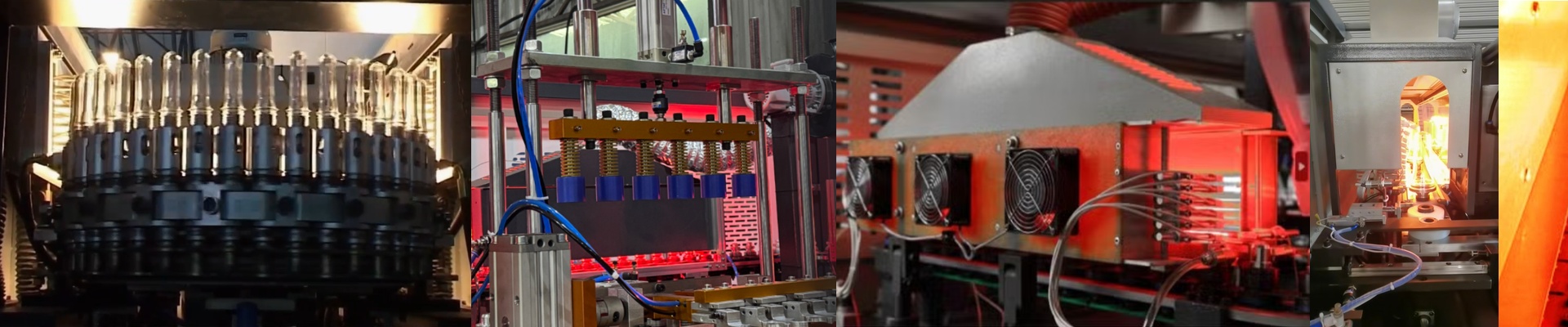
You know how it goes. The preform oven on your blow molder starts to wander—heating profiles go sideways, and the controls start throwing alarms. Maintenance keeps throwing emitters at the problem, but the line still coughs and stutters. Every minute of downtime is money flying out the door, and the energy bill keeps climbing.
What matters under the hood
We built the PET preform oven infrared heating unit around a high-efficiency halogen lamp emitter, tuned for short-wave response. It hits the PET preform wall directly, so you get rapid, controlled heat with fast thermal response. Each unit is specced to match the OEM heating tunnel geometry and voltage—230V or 460V configurations—and uses standard R7s connectors so it plugs in clean. The quartz envelope takes thermal shock without flinching, and the reflector geometry keeps the heat pattern tight on the neck and body. Output stays stable, and repeatability is exactly what you need for consistent stretch blow molding.
Why this fits the process
In stretch blow molding, the oven sets the pace. When the infrared heating unit matches your machine—Sidel, Krones, SIPA, Husky, SACMI, or Nissei ASB—the preform hits the right temperature window fast and even. That means fewer rejects, stable bottle weight, and a heating curve you can count on. You’ll see a shorter warm-up, more consistent cycles, and lower kWh per thousand bottles. Replacement is straightforward: same mounting, same electrical interface, and the same thermal profile your blow molder was designed to run.
The details that keep you up at night
Installation is simple, but alignment is not optional. Set the emitter position and reflector focus to the OEM spec, then verify with a handheld pyrometer across the tunnel. Expect a slightly higher initial current inrush at start-up. Make sure your contactor and wiring are sized for the load. And yes, the quartz tube is tough—but it hates oils and contamination. Keep the tunnel clean, and the unit will hold output for 5,000+ hours with minimal drift.