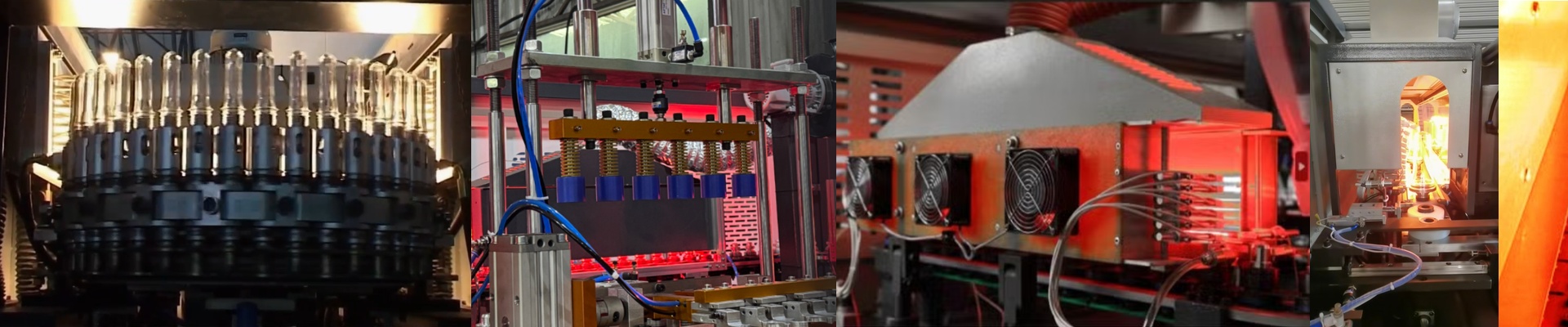
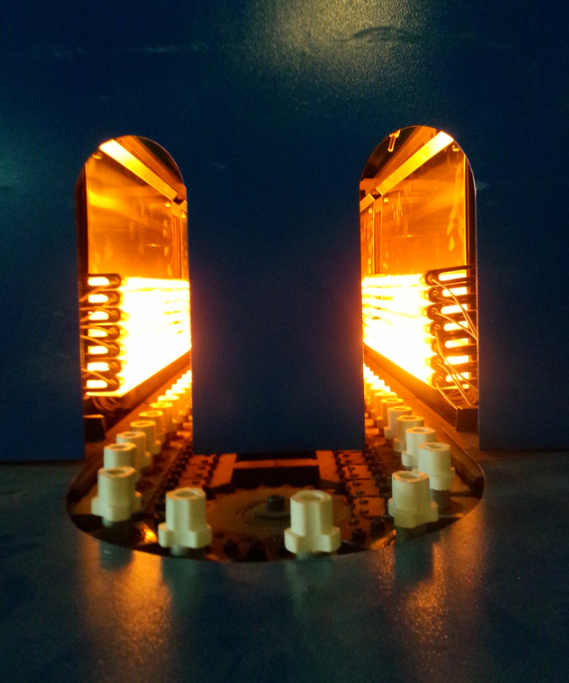
On the blow molding floor, an IR lamp going down shuts the line down fast. Preform heating starts to drift, and suddenly you’re chasing uneven bottle weight and clarity. We built these IR lamps to take the beating — shock-resistant, stable in the heating tunnel even when you’ve got vibration, rapid cycling, and repeated thermal shock. What matters, technically We match OEM heating performance with 1:1 parameter coverage across the mainstream blow molders. For Sidel SBO, SBO Evolution, and SBO Compact, the quartz halogen emitters run at 230 V, 1.5–3.0 kW, OD 10 mm, with standard R7s connectors. For Krones Contiform and ErgoBloc lines, we supply 240 V, 2.0–3.6 kW emitters sized to the original footprint, keeping the same filament geometry and reflector profile. For SIPA SBO, SBO Evolution, and X-Form, we match 220 V, 1.8–3.2 kW, OD 10 mm, and the correct end-cap spacing. For Husky Hypet and Preform systems, we provide 230 V, 2.4–3.8 kW lamps engineered to the same thermal response curve. All versions use a reinforced quartz tube and internal shock-damping support, rated to 950 °C peak and tested to 100,000 on/off cycles without fracture. Why it holds up on the line You get repeatable preform heating, so stretch blow molding runs with fewer pinholes, better top load, and less crystallinity drift. These lamps hit target temperature quickly, which shortens startup and speeds up changeovers. Energy use drops because the emitter heats on demand and holds stable output without overshoot. With 5,000+ hours in field service and less than 5% output drop, replacements happen less often, and planned maintenance stays straightforward. The details that keep you out of trouble Match the lamp to the exact machine model and heating zone layout. Before ordering, verify voltage, wattage, OD, and connector type. Confirm the mounting bracket and reflector alignment — even a small gap will throw off temperature uniformity. Handle the quartz tube with clean gloves. Oils and residue will create hot spots and shorten life.