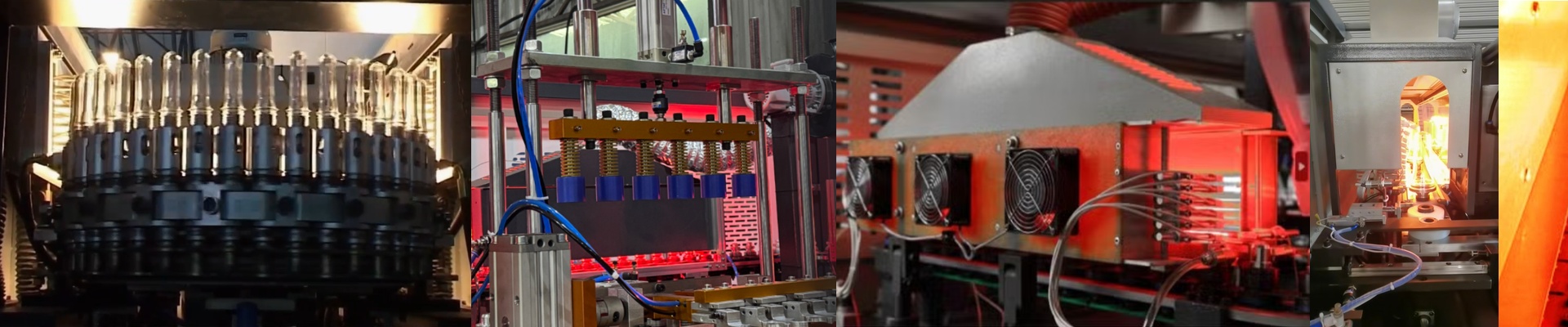
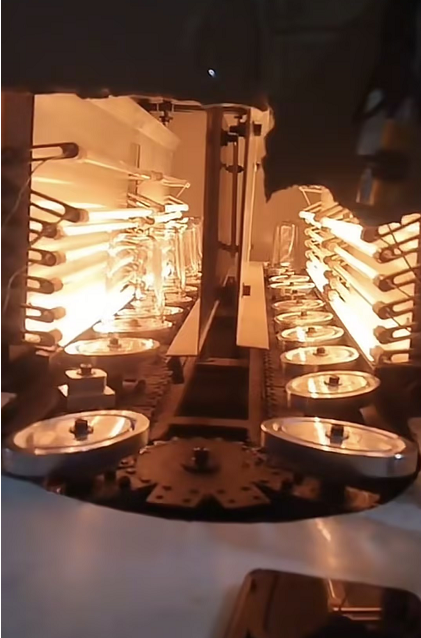
Out on the line, those heavy oil-bottle preforms are brutal on the heating tunnel. Standard emitters tend to leave the neck short and dump too much heat into the body. That shows up as weak biaxial orientation, heavy crystallization, or wall thickness that swings all over the place. When the heat profile is off, you pay for it in scrap and restarts. What matters under the hood We built this heater for thick oil preforms around short-wave infrared halogen emitters, paired with quartz tubes for fast response and stable output. The geometry is tuned for thick walls: crank the watt density on the neck and shoulder, then ease off with a smoother ramp along the body. You get a 1:1 match to the OEM heating tunnel specs—voltage, power, length, and R7s connector details—so the lamp drops right in and the control reads true. Setpoints hold, recovery after a jam is quicker, and output stays consistent across the full lamp life. Here’s why it works on thick oil preforms. They carry a lot of thermal mass, so you need penetration without scorching the surface. Short-wave infrared puts the energy where it needs to be, fast and precise, which helps shorten cycle time and cut down temperature drift. The payoff is fewer underheated shots that blow out, fewer overheated ones that crystallize, and less time chasing one bottle style by tweaking zones. You also save energy because the profile hits equilibrium sooner, and changeovers mean fewer scrap bottles. Installation is straightforward, but alignment is everything. A sloppy R7s connection gives you uneven heating and will cut lamp life. These emitters run hot, so airflow and keeping reflectors clean are non-negotiable. And with that high power density, the preform has to rotate steadily—any wobble and you’ll get hot spots. Spec the lamp to your machine model and the preform geometry, and the heat profile holds shift to shift, line to line.
ライン上では、あの重いオイルボトル用プリフォームは加熱トンネルに大きな負荷をかけます。標準のエミッターはネック部の加熱が不足し、ボディ部に過剰な熱を投入しがちです。その結果、二軸配向が弱くなったり、結晶化が進行したり、壁厚が不安定になるといった問題が発生します。加熱プロファイルが適切でないと、不良品や再起動のコストが増大します。
内部の重要ポイント
このヒーターは、短波長赤外線ハロゲンエミッターを中心に設計されており、クォーツ管との組み合わせで応答性が高く安定した出力を実現しています。厚い壁に対応するため、ネックとショルダー部のワット密度を高め、ボディ部では滑らかな立ち上がりを設けています。OEMの加熱トンネル仕様(電圧、電力、長さ、R7sコネクターの詳細)に1:1で合致しているため、ランプをそのまま装着でき、制御も正確に読み取れます。設定値は安定し、ジャム後の復帰も速く、ランプ寿命を通じて出力が一貫します。
厚いオイルプリフォームに効果的な理由は、熱容量が大きいため、表面を焦がさずに熱を浸透させる必要があるからです。短波長赤外線はエネルギーを必要な場所に迅速かつ正確に届けるため、サイクルタイム短縮と温度ドリフトの低減に寄与します。その結果、加熱不足で破裂するショットや過熱による結晶化が減り、ゾーン調整でボトルスタイルを追いかける手間も軽減されます。また、プロファイルが早期に平衡状態に達するためエネルギー消費も削減され、切り替え時のスクラップボトルも減少します。
設置はシンプルですが、アライメントが非常に重要です。R7sコネクターの接続不良は加熱ムラを招き、ランプ寿命を縮めます。エミッターは高温で動作するため、エアフローの確保とリフレクターの清掃は必須です。また、高いパワー密度のためプリフォームは安定して回転させる必要があり、振動があるとホットスポットが発生します。機械モデルとプリフォーム形状に合わせてランプを仕様決定すれば、加熱プロファイルはシフト間、ライン間で安定して維持されます。